gruppenausstellunggroup exhibition
- Beatriz Domínguez (Caoticollage)
- Novidia
- Halyna Hamelink
- Elena Rabkina
- 4l1c3
- Tineke Noppers
- Mariana Rodriguez Acebal
- Mallie Hellmer
- cornelia es said
- Becky Jaraiz
- Rita Evs
- Maria Carolina Diez
Ergorithmus: What Follows from Algorithms?
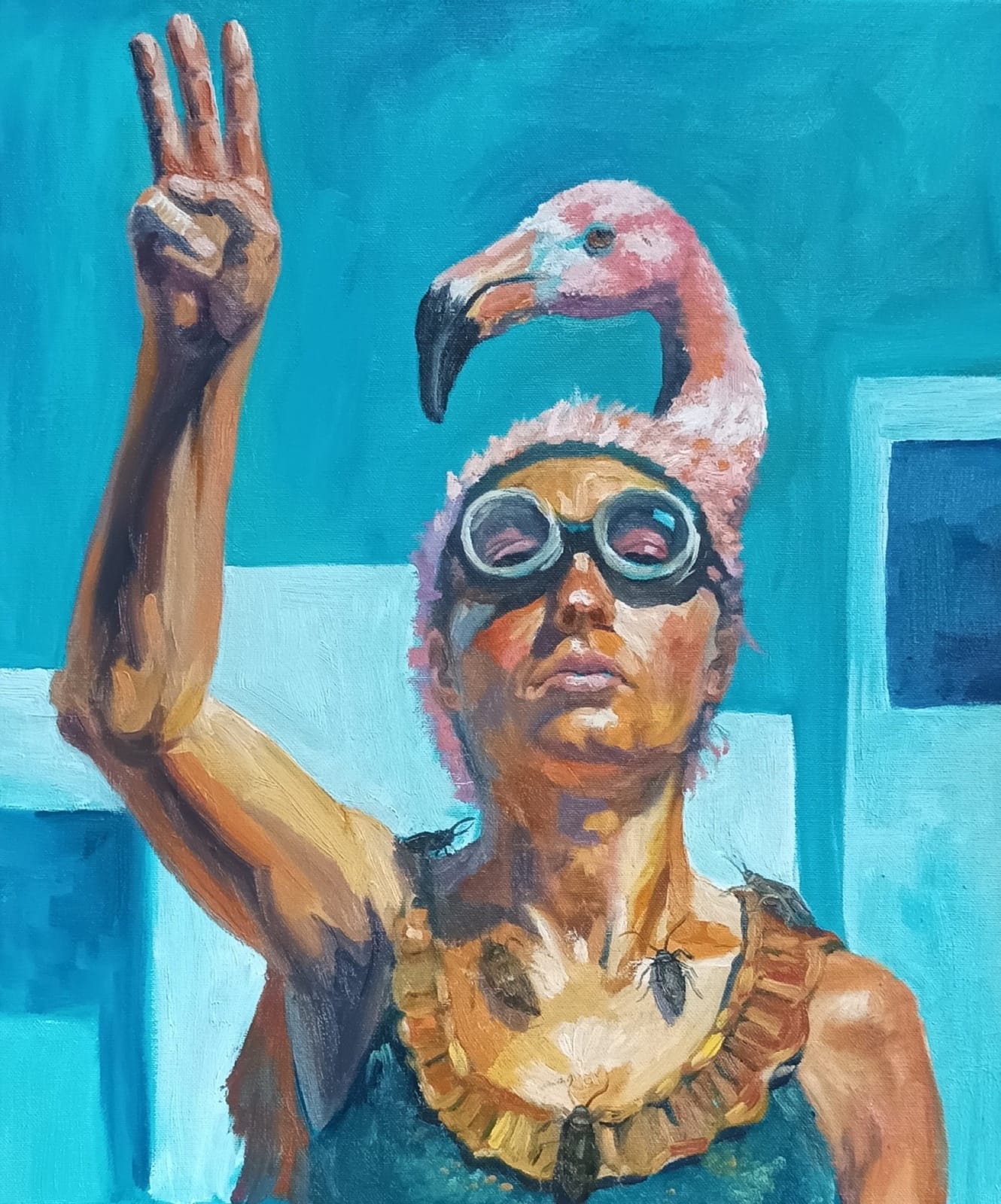
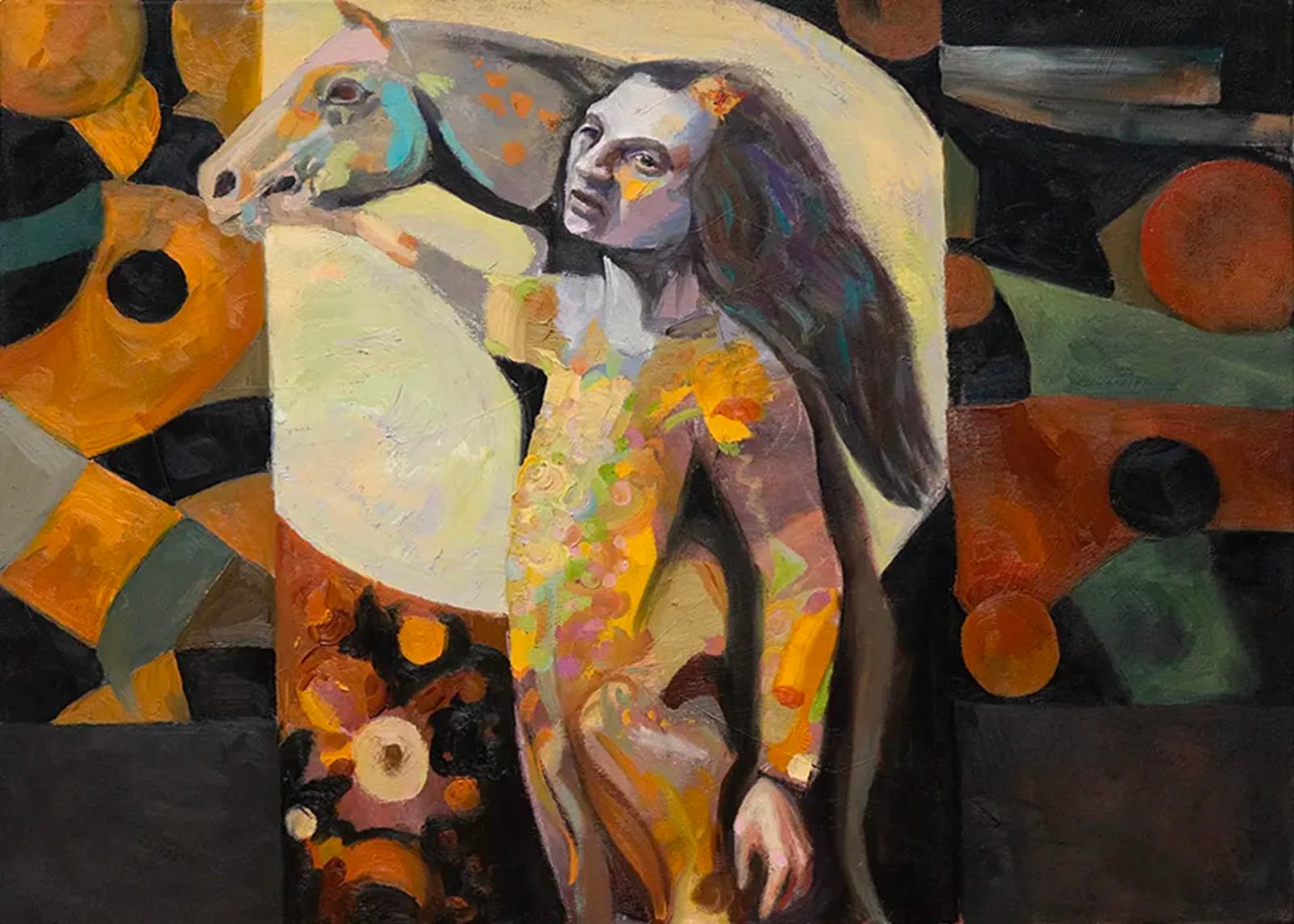
Bild 1: cornelia es said, Symbole des Widerstands (Symbols of Hope), 2026, Ölgemälde, © Cornelia Es Said Bild 2: Cornelia Es Said, Stroking a(n In)visible Horse it1, 2023, Oil on Canvas, 50 x 70 cm, © Cornelia Es Said
Ergorithmus brings twelve artists together at Zemin Berlin from 26 November to 10 December 2026. The group exhibition by the FLINTA* collective Punst Art, curated by Becky Jaraiz, examines what algorithms, AI and digital platforms do to perception, identity and public debate. The title joins ergo, Latin for “therefore”, with the German word Algorithmus: what follows from algorithms?
Technology shapes more and more of how we experience everyday life. It influences how we consume information, communicate with others, and understand ourselves and the people around us within social and political contexts. Bringing together the work of eleven artists, the exhibition explores the cultural, cognitive, environmental, and social effects of digital technologies and digital spaces.
In a context of unlimited and easily accessible information, a paradox emerges: the exponential growth of data does not necessarily lead to greater knowledge or understanding. Instead, it produces saturation, confusion, and disorientation. An architecture of informational and social order takes shape, in which algorithms and digital platforms model our experience by filtering, prioritising, and presenting content without a chronological structure or context.
The spread of “fake news” and AI-generated content capable of supporting almost any argument is creating growing uncertainty about what is true or false. This instability feeds a desire for simple narratives and values that promise stability. The exhibition examines how this need is appropriated by discourses that respond to complexity with immediacy, emotion, polarisation, and exclusion – with particularly severe consequences for minorities and groups already living in vulnerable conditions.
In this way, technology and digital ecosystems reshape our perception of reality and the ways we position ourselves within social systems, ultimately reconfiguring the conditions for public debate and democracy itself.
The eleven artists propose a critical perspective in response to these developments.