Holding Things Together
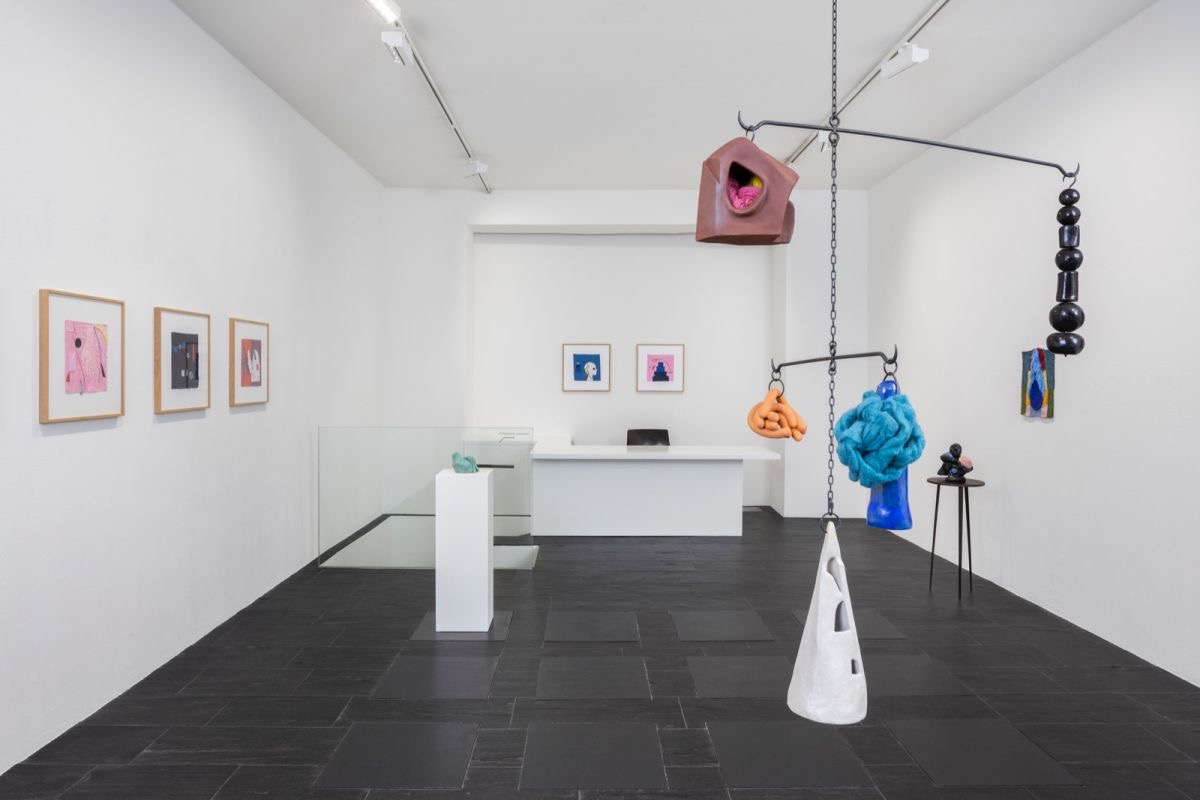
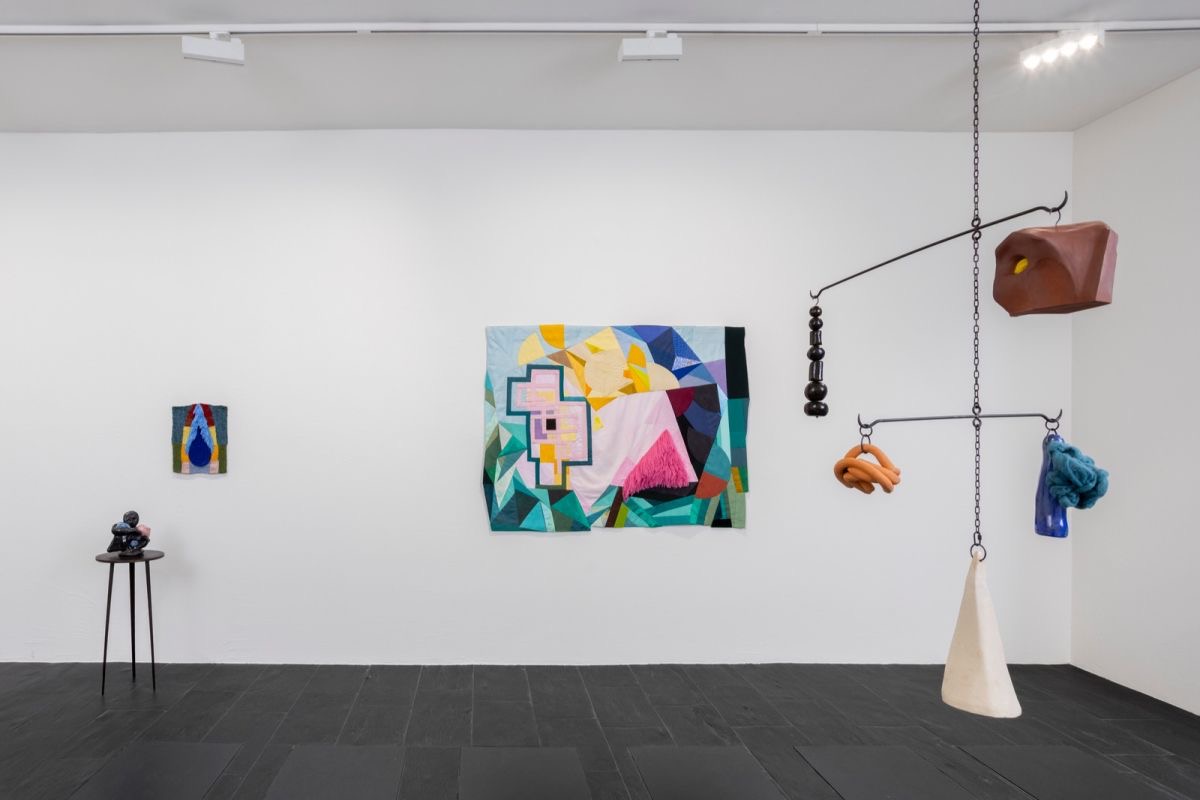
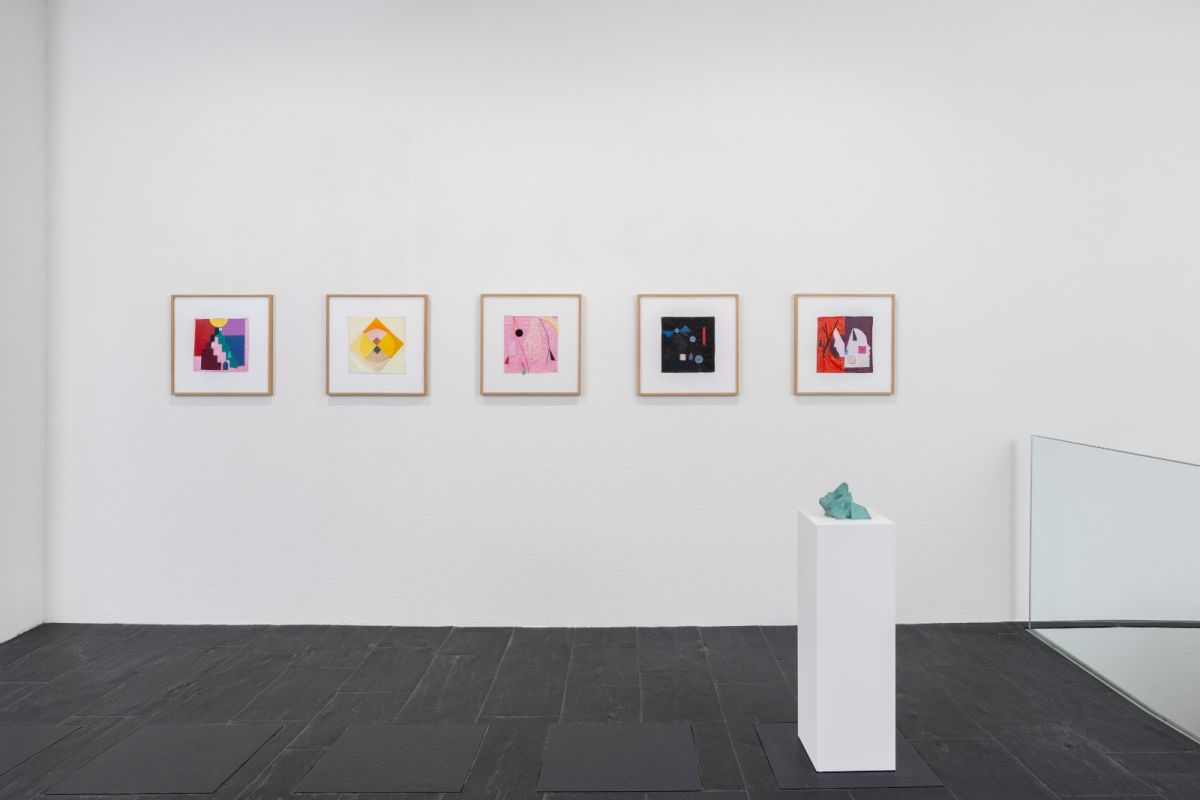
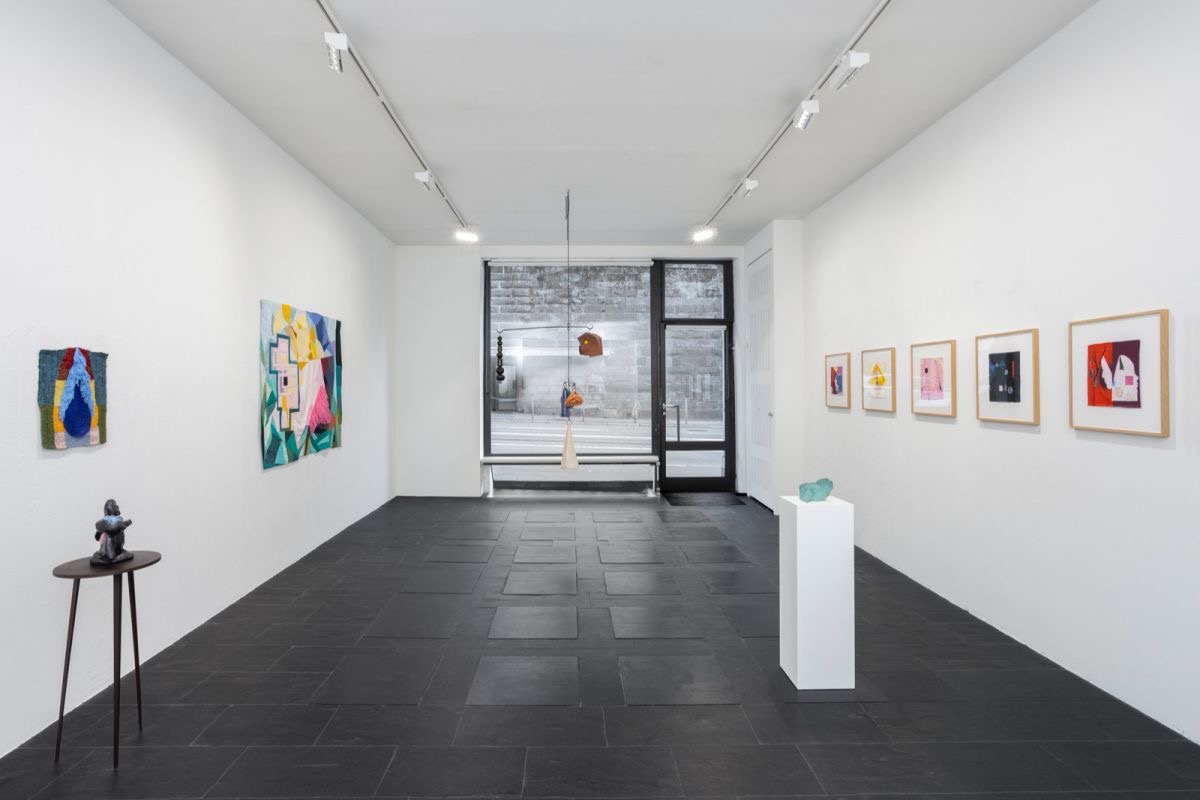
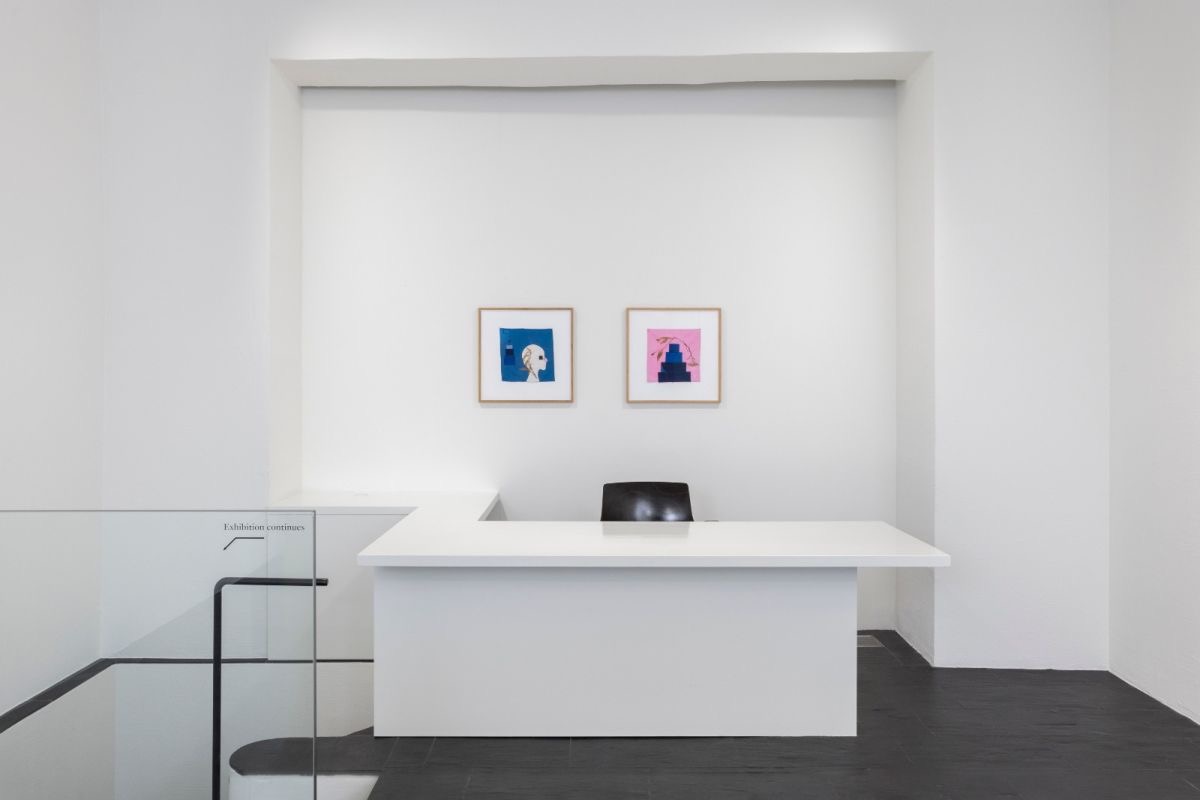
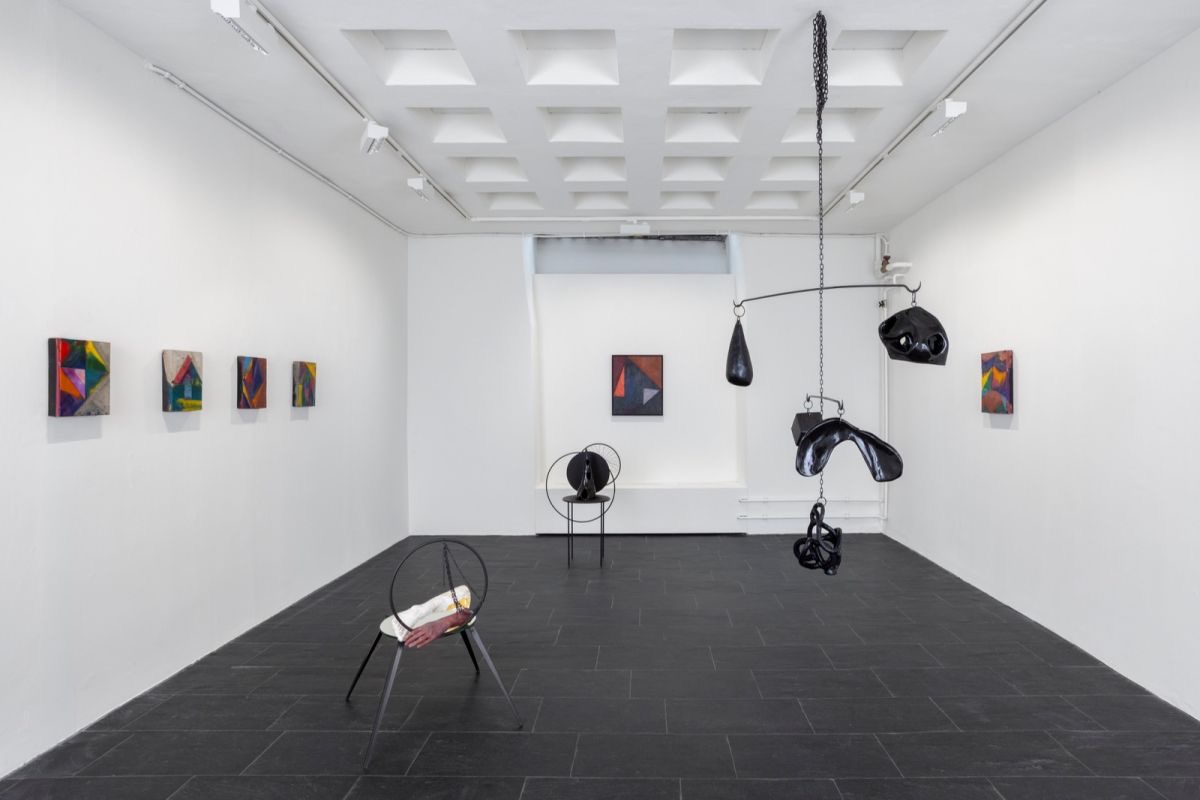
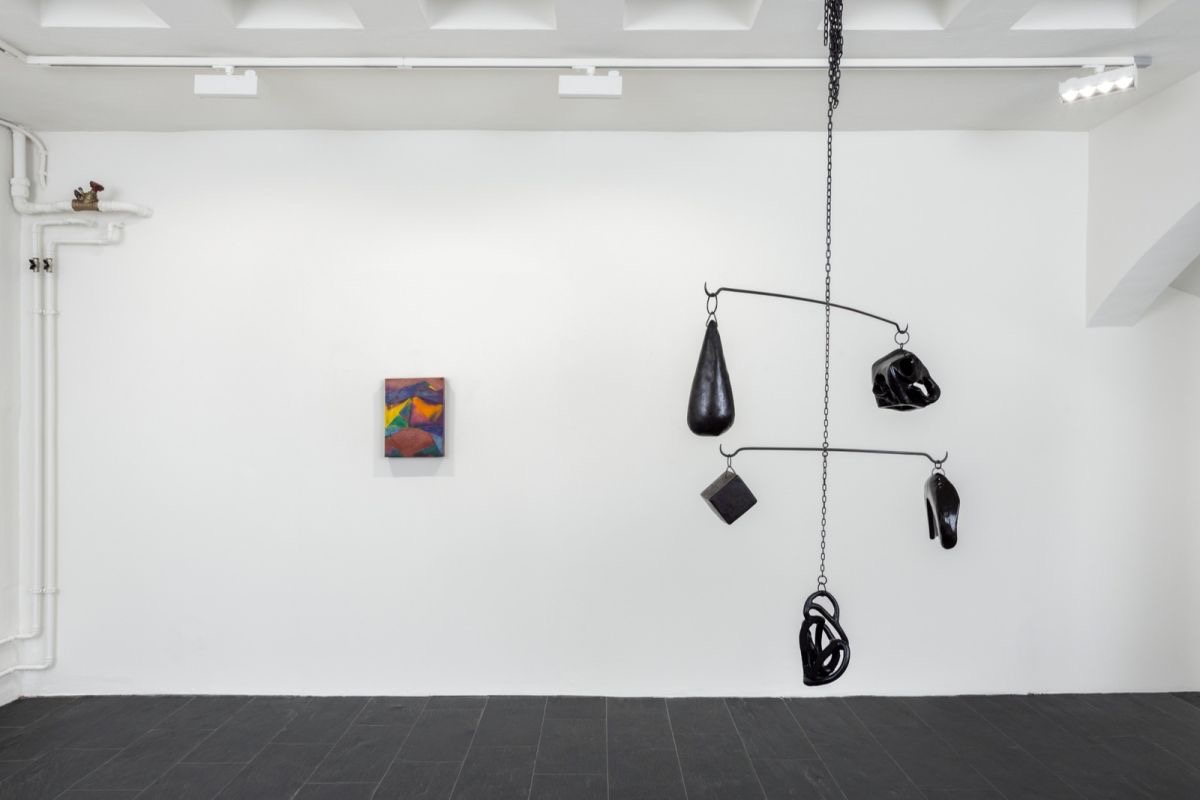
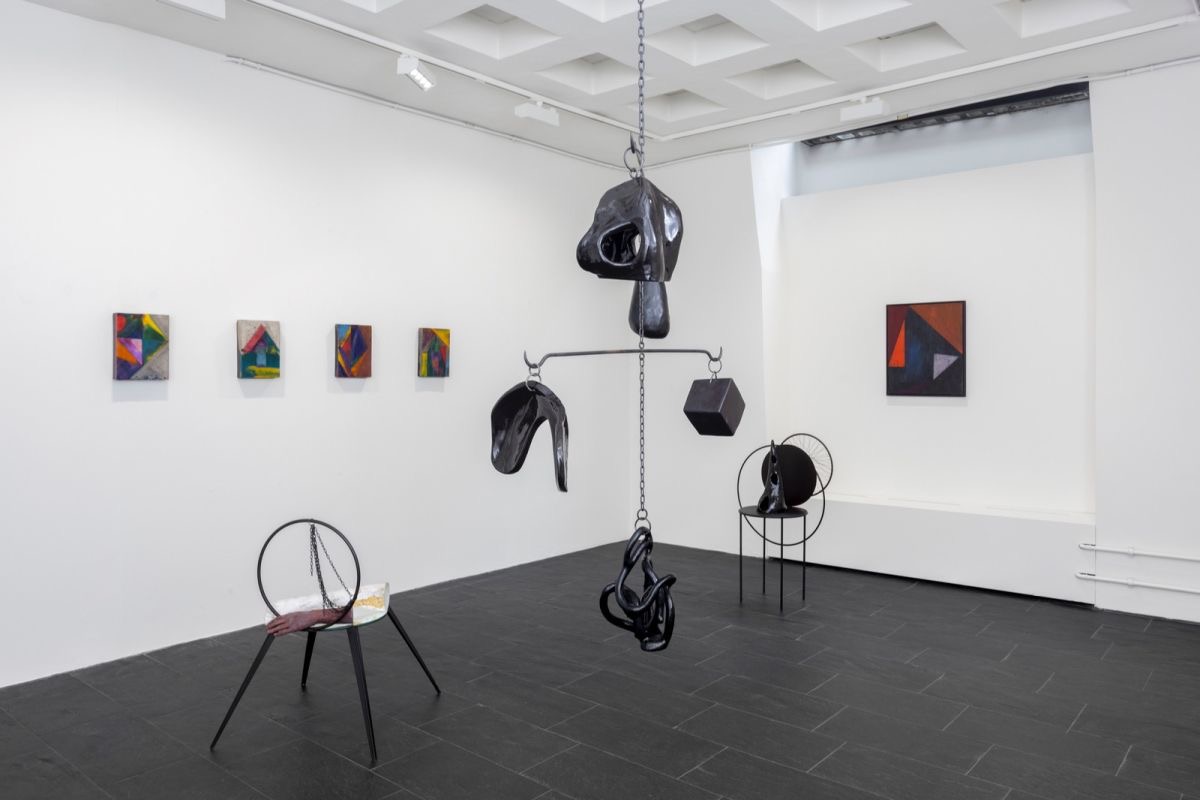
AktuellNowExhibition view, Loredana Sperini, Holding Things Together, Galerie Urs Meile, Rämistrasse, Zurich, Switzerland, 17 September - 7 November, 2026. Photo: Oliver Kümmerli
From suspension, holding comes back down to the body. Two chairs and a stool (each Untitled, 2026), altered by what occupies their seat, are arranged across the exhibition: one carries a pointed house, another a figure clutching bundles of wool, while a third hosts fragments of a ceramic body laid over a mirror. Chairs and stools are both designed to hold the weight of a body, but a chair does something more: its backrest gives that body a position and a direction. It holds and it orients. In Sperini’s works, though, these two functions come apart. On one chair sits a ceramic house whose dark walls enclose an equally dark interior. Chairs hold bodies by supporting them; houses hold bodies by containing them: Sperini places one form of holding on top of the other. Both organize an inside against an outside; both shelter; both can also confine. But where a seated body would be given a direction, the house refuses it. It sits without sitting. The chair can hold its weight but cannot tell it which way to face. Holding is satisfied. Orienting has nowhere to go and stops. On the stool, a hunched figure gathers bundles of soft wool in its arms. Without a backrest to prescribe a direction, the stool performs the more basic function of support: it holds the figure and the figure, in turn, holds the fibre - Holding Things Together, quite neatly, except the gesture is not neat at all. What looks like cradling might be clutching. Holding slips very easily into holding on to. Care and possession have inconveniently similar postures, and from the outside the difference can be a matter of pressure. The figure folds around what it carries; holder and held begin to take shape from one another until it is no longer clear whether one is simply supporting the other or whether each has become necessary to the position of both. In the third piece, a ceramic hand and foot lie over a mirror set into the seat of the chair. The body is finally recognizable, and for exactly this reason, conspicuously incomplete. As someone approaches, the mirror introduces a living presence appearing only as reflection. Several bodies then occupy the same place: the absent one already built into the chair’s proportions; the ceramic one, materially present but fragmented; and the visitor’s one, arriving only as reflection. The mirror holds perfectly and retains nothing. For a moment, though, it orients. The viewer comes closer to look and finds themselves placed inside the work, among the fragments. Then they move, and the arrangement loses them.
The exhibition also includes works that sit closer to the walls. In them, Sperini continues to approach materials through what they can and cannot be made to do, but within the more contained format of the picture plane. In rectangular panels, layers of coloured wax are applied to cement, bringing the weight and rigidity of the support into contact with the softer and more malleable surface of encaustic painting. Textiles, elsewhere tangled or bundled, are now compressed into two dimensions. In a series of square works, cotton, leather and other fibres are arranged into compositions that the artist compares to diary pages: quickly assembled records of a particular moment, occasionally incorporating fruit, leaves and other fragments gathered from outside. These works are then, quite literally, held: set behind glass and fixed within a frame, kept the way a pressed flower is kept.
Belonging to a different rhythm is a colorful quilt, a large textile piece built gradually through sections added, stitched down, rearranged and revised over many days. If the smaller textile works hold the immediacy of a single moment, the quilt holds accumulation, different times permitted to occupy the same surface. Quilts have long accompanied people through stages of life. They travelled with those leaving home and passed from one pair of hands to another until they became difficult to separate from the ones who made, repaired or slept beneath them. Their histories accumulated the same way their surfaces did: piece by piece, seam by seam. Sperini’s quilt inherits this logic of slow assembly, piecing together a landscape built from triangles, rectangles, circles and, near its centre, the outline of a house. Then, a dense mass of pink fringe falls from partway down the composition, interrupting the geometry and projecting beyond the otherwise flat surface into the room. Two competing logics seem to control the piece, one of construction, the other of proliferation. The geometric sections depend on division and assembly, while the fringe appears to multiply beyond the structure intended to contain it. Sewing, the technique holding the quilt together, belongs ostensibly to the first principle, yet its own method is accumulative, a needle passing again and again through a surface, drawing separate edges into contact without forcing them to become one piece instead of many.
Holding Things Together is not the same as making them whole. To hold something together is, first, to admit that it is made of parts.