Landscapes, Cityscapes and Trees
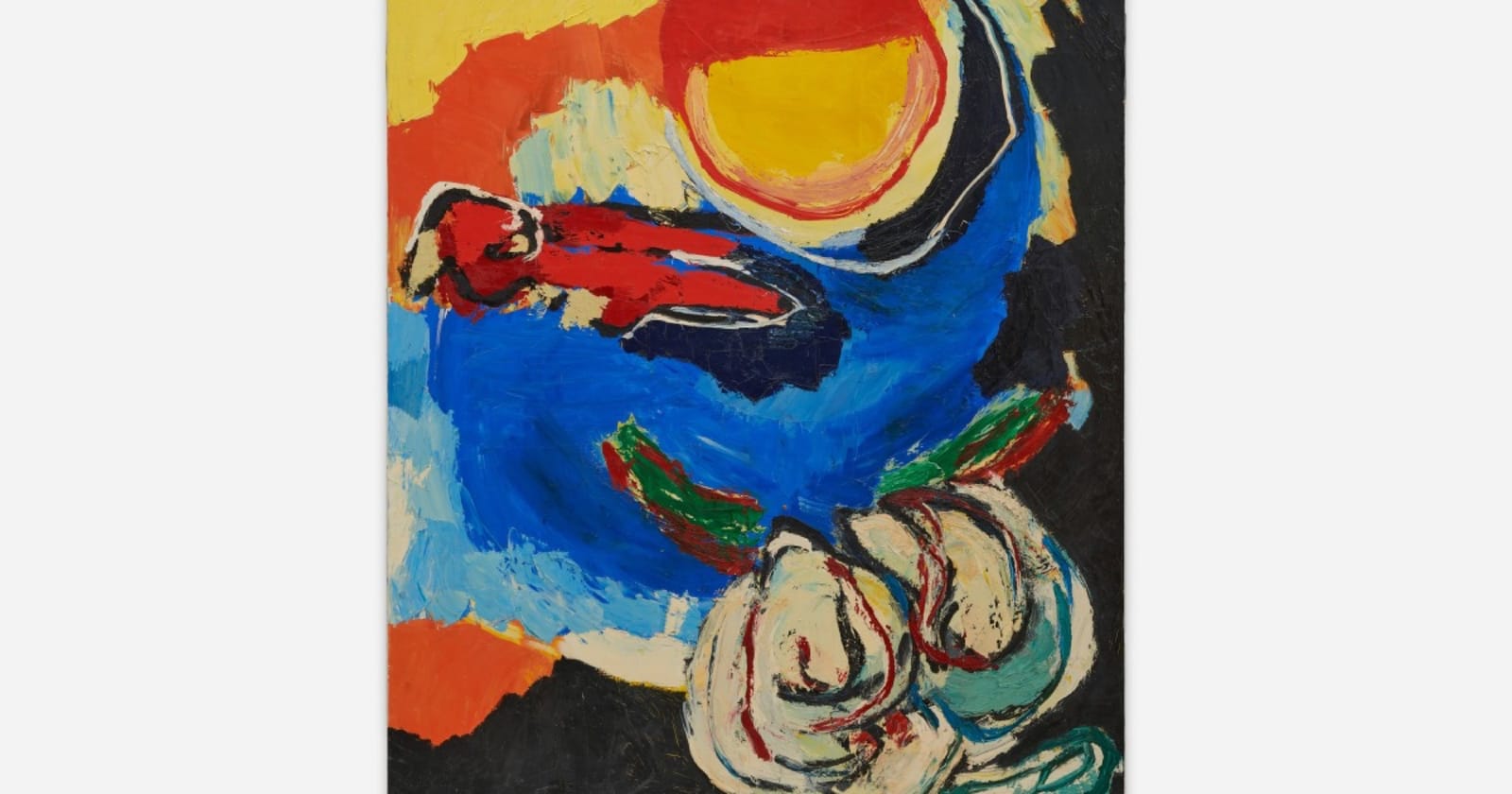
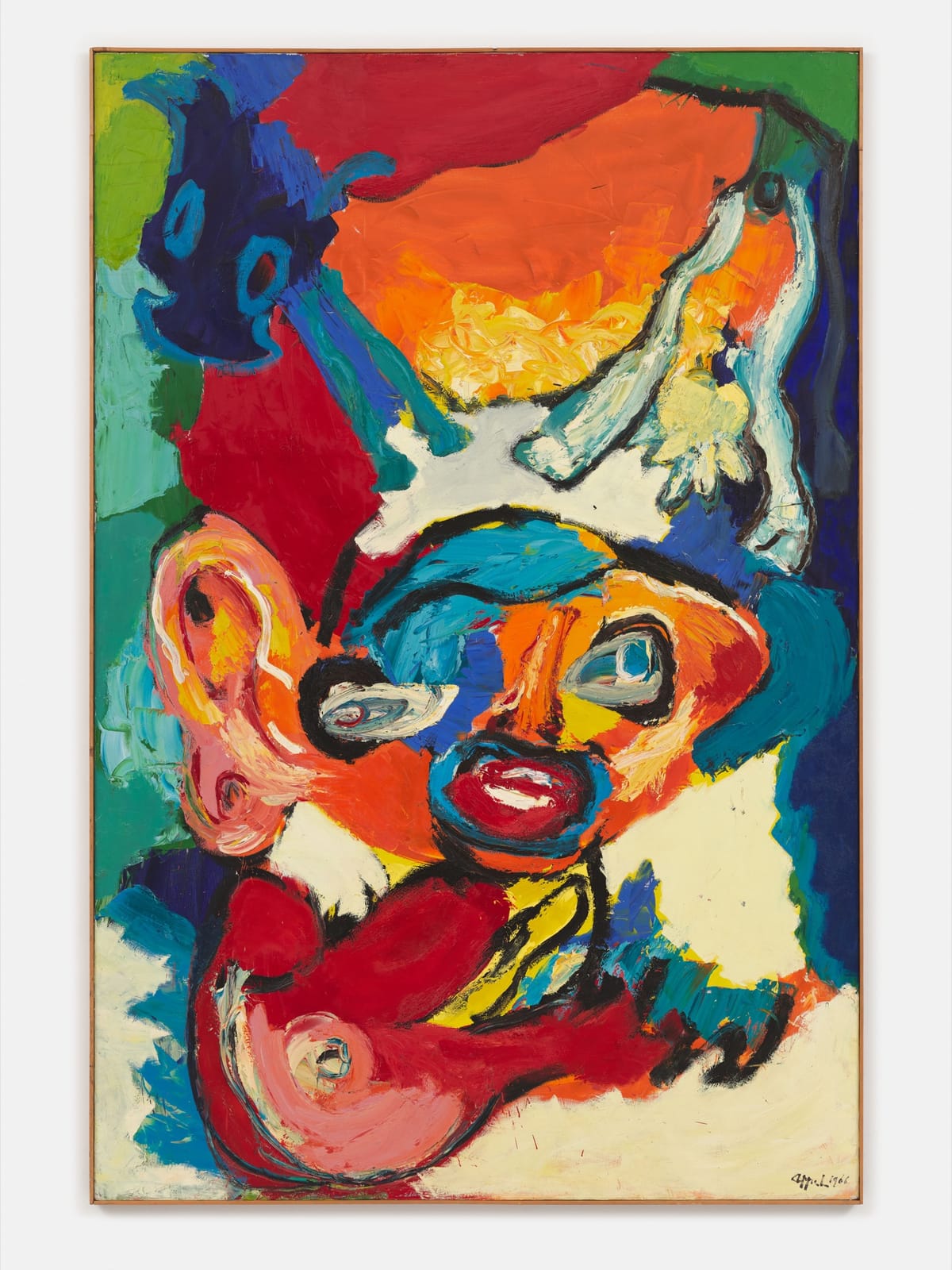
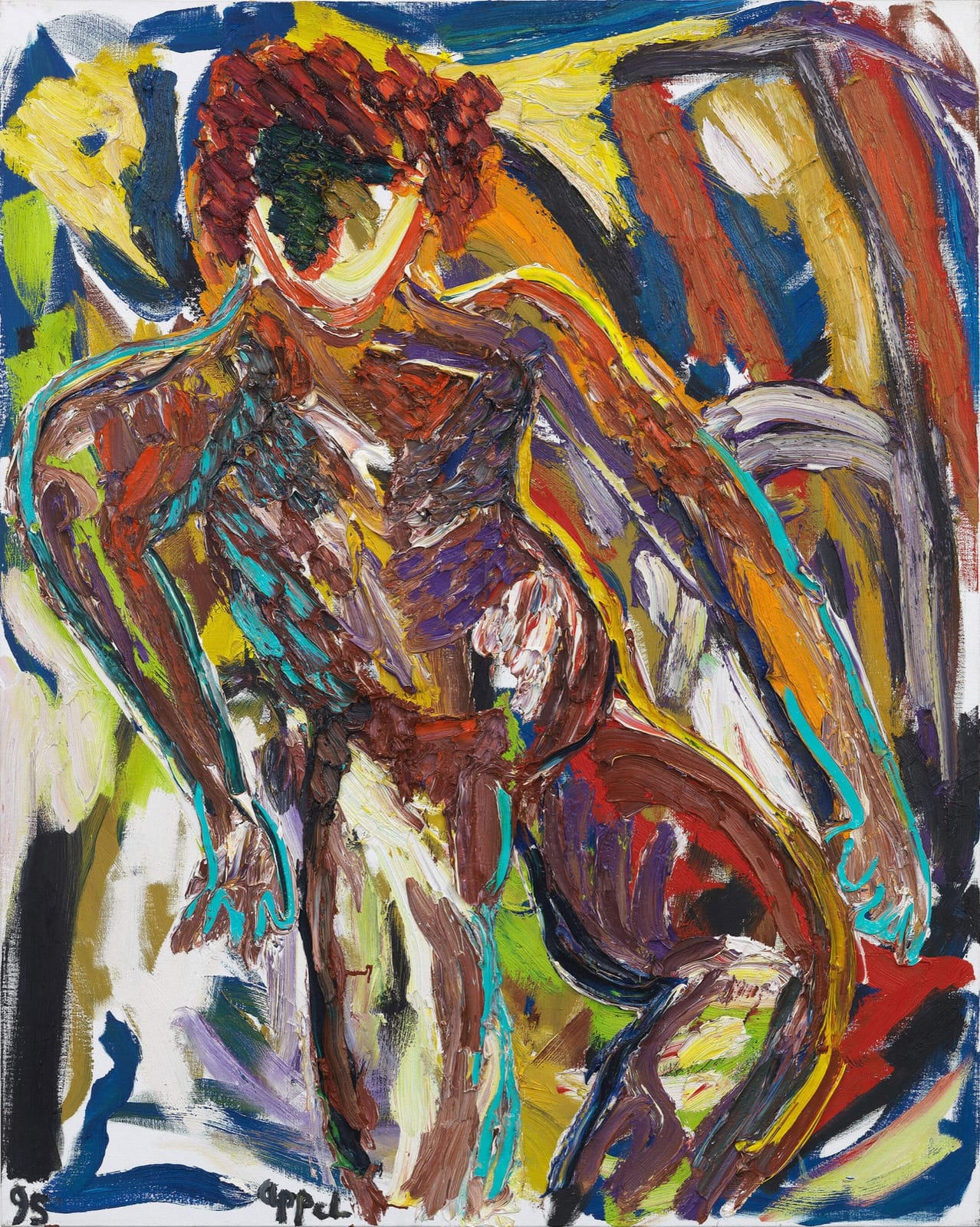
Bild 1: Karel Appel, Landscape, 1966, Courtesy Galerie Max Hetzler Bild 2: Karel Appel, Belly Dancer with Orange Cow, 1966, © Karel Appel Foundation / VG Bild-Kunst, Bonn, 2019. Photo: def image, Courtesy Galerie Max Hetzler Bild 3: Karel Appel, Nude no. 32, 1995, Courtesy Galerie Max Hetzler
Galerie Max Hetzler, Berlin, is pleased to present a solo exhibition of works by Karel Appel, titled Landscapes, Cityscapes and Trees. This is the eighth presentation of Appel’s work with the gallery.
‘Like the most recent Karel Appel exhibition, Variations on a Theme, which took place at Galerie Max Hetzler, London in 2026, the current exhibition has been thematically conceived to present a selection of works that stretch across the artist’s oeuvre. Here, works of diverse styles from different periods are juxtaposed.
In the early 1980s, Appel embarked on a most distinctive subject: cityscapes with clouds. It seems to have been inspired, at least in part, by an instance of the artist working over illustrations in a book – in this case an exhibition catalogue of drawings by the eighteenth-century topographical draughtsman, Jan de Beijer (1703–1780). The extent to which Appel had been working over found images – including photographs, pictures in books, and even texts – has only recently been fully uncovered. From here, he would make drawings as an intermediate stage, before applying the pictorial ideas that occurred during this process onto canvas. The exhibition’s first room exemplifies all three stages.
The second room is dedicated to a subject that Appel returned to repeatedly: the idea of a fusion between the human figure and the landscape. Here, one painting from the ‘Visage-Paysage’ series of the mid 1970s, that marked his return to painting after his CoBrA Pop period, confronts a painting from the Tuscan series: Walking Figure in Landscape no. 1, 1990.
In the late 1980s, Appel purchased a large property in Mercatale, near Florence, where he would spend his summers working in tranquility, off grid from city life. The Tuscan environment triggered a return in force to the landscape theme: early in the morning, Appel would sit in front of his studio, a deconsecrated chapel, and look at the Tuscan landscape, internalising, as it were, what he saw. Then he would stand up and enter the studio to paint, turning his back to the landscape.
In the central room, one of Appel’s ‘Horizon of Tuscany’ paintings confronts an earlier, large diptych of the city-clouds subject, only with windmills instead of a cityscape. Then there is also a Landscape from 1966, in a vertical format – an unusual orientation for the genre.
The last room of the exhibition combines works from 1944, the late 1970s, 1991 and an assemblage painting from 2005, the year before Appel died, featuring the theme of landscapes and trees. It is revealing to compare works that have been created so far apart, to distinguish constancies from changes during a lifelong creative career. It is also remarkable to see the artist incorporate neon tubes in his work, in the final year of his life.’
Franz W. Kaiser, 2026
Karel Appel (1921–2006) was born in Amsterdam and died in Zurich. The artist lived and worked internationally, primarily in Paris and New York. Solo exhibitions of Appel’s work have been held in important institutions including Musée d’Art Moderne de Paris (2017); Gemeentemuseum Den Haag, The Hague (today Kunstmuseum Den Haag) (2016, 2005 and 2001); Emil Schumacher Museum Hagen; The Phillips Collection, Washington, D.C.; Staatliche Graphische Sammlungen, Munich (all 2016); Centre Pompidou, Paris (2015); Museum Jorn, Silkeborg (2013); Albertina, Vienna (2007); National Museum, Belgrade; Palais des Beaux-Arts, Brussels (both 2004); Kunstforum Wien, Vienna (2002); Stedelijk Museum Amsterdam (2001); and Stedelijk Museum voor Actuele Kunst, Ghent (2000), among others.
Appel’s work is represented in the collections of Albertina, Vienna; Astrup Fearnley Museet, Oslo; Centre Pompidou, Paris; Kunstmuseum Den Haag, The Hague; Hirshhorn Museum and Sculpture Garden, Washington, D.C.; Los Angeles County Museum of Art; Moderna Museet, Stockholm; The Metropolitan Museum of Art, New York; Musée d’Art Moderne de Paris; Museo Thyssen-Bornemisza, Madrid; The Museum of Modern Art, New York; Neue Nationalgalerie, Berlin; Pinakothek der Moderne, Munich; Rijksmuseum, Amsterdam; Solomon R. Guggenheim Museum, New York; Stedelijk Museum Amsterdam; and Tate, London, among many others.