The Alis' Narrative
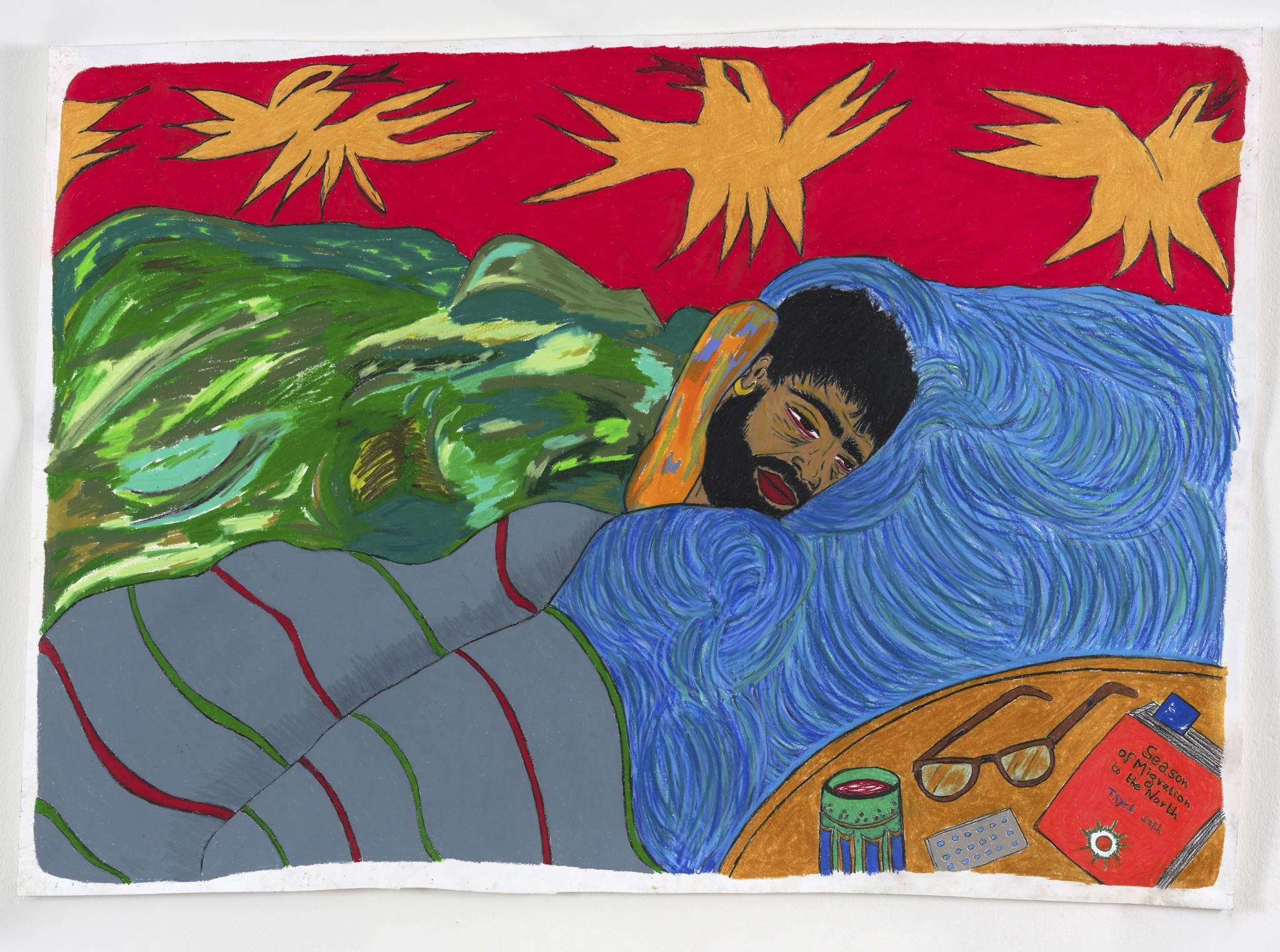
BaldSoonSoufiane Ababri, Grande fatigue II, 2026, Colored pencil on paper, 72 x 100 cm, Unique
DITTRICH & SCHLECHTRIEM is pleased to present The Alis’ Narrative, the gallery’s third solo exhibition with Soufiane Ababri and the artist’s first solo show in Cologne. Opening during the week of ART COLOGNE, the exhibition will be on view at our new Cologne gallery at Roonstraße 108 from November 3, 2026, through January 30, 2027. An opening reception will take place on Friday, November 6, 6–9 PM.
Ababri’s practice draws on literature, cinema, music, and social and political histories to explore otherness, desire, and belonging. Weaving his own biography and heritage with a broader archive of queer cultural and intellectual references, his work questions how histories are written, foregrounding minor histories, personal memory, and intimate encounters. His ongoing series of colored-pencil drawings known as Bedworks are made while reclining in bed, deliberately shifting artistic production from the vertical space of the studio to the horizontal and private space of the bedroom. In doing so, Ababri turns intimacy and domesticity into sites from which to consider queer and migrant experience and the complexities of living between cultures.
The Alis’ Narrative takes its title from Rainer Werner Fassbinder’s 1974 film Ali: Fear Eats the Soul (Angst essen Seele auf). The film centers on the relationship between Emmi, an older German woman, and Ali, a younger Moroccan migrant worker in West Germany. Their intimacy unfolds within an environment marked by racism, social prejudice, and exclusion. Presented in Cologne, a city with its own significant history of labor migration, the exhibition brings these themes into dialogue with Ababri’s contemporary perspective.
The plural Alis expands the reference beyond a single protagonist toward a wider constellation of strangers and diasporic queer lives. Here, the position of the stranger becomes both personal and collective: a way of considering what it means to inhabit a place while remaining marked as foreign to it, and the forms of intimacy, kinship, and self-representation that can emerge from that condition. The new drawings approach these questions through scenes of intimacy, solitude, and encounter. Moving between private and social spaces, Ababri’s figures negotiate closeness and distance, vulnerability and desire. In these everyday moments, intimacy itself becomes a way of imagining belonging.
The drawings are presented alongside new painted wooden room dividers, or paravents, extending Ababri’s exploration of intimacy and belonging into the exhibition space. By dividing spaces without fully enclosing them, the paravents negotiate visibility and concealment, as well as public and private life. Identity and intimacy do not emerge independently of spatial conditions but are shaped and constrained by them.