repertoire
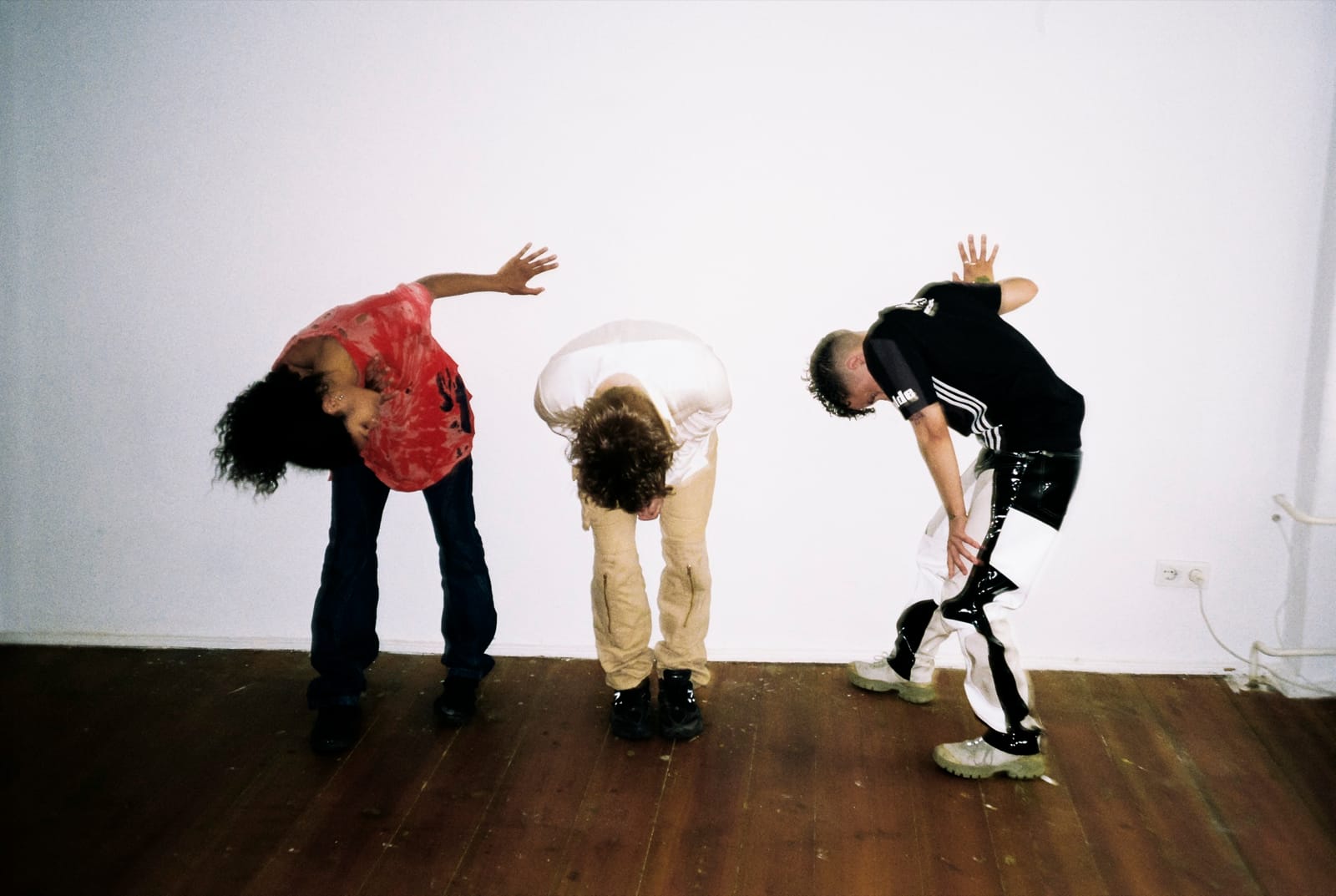
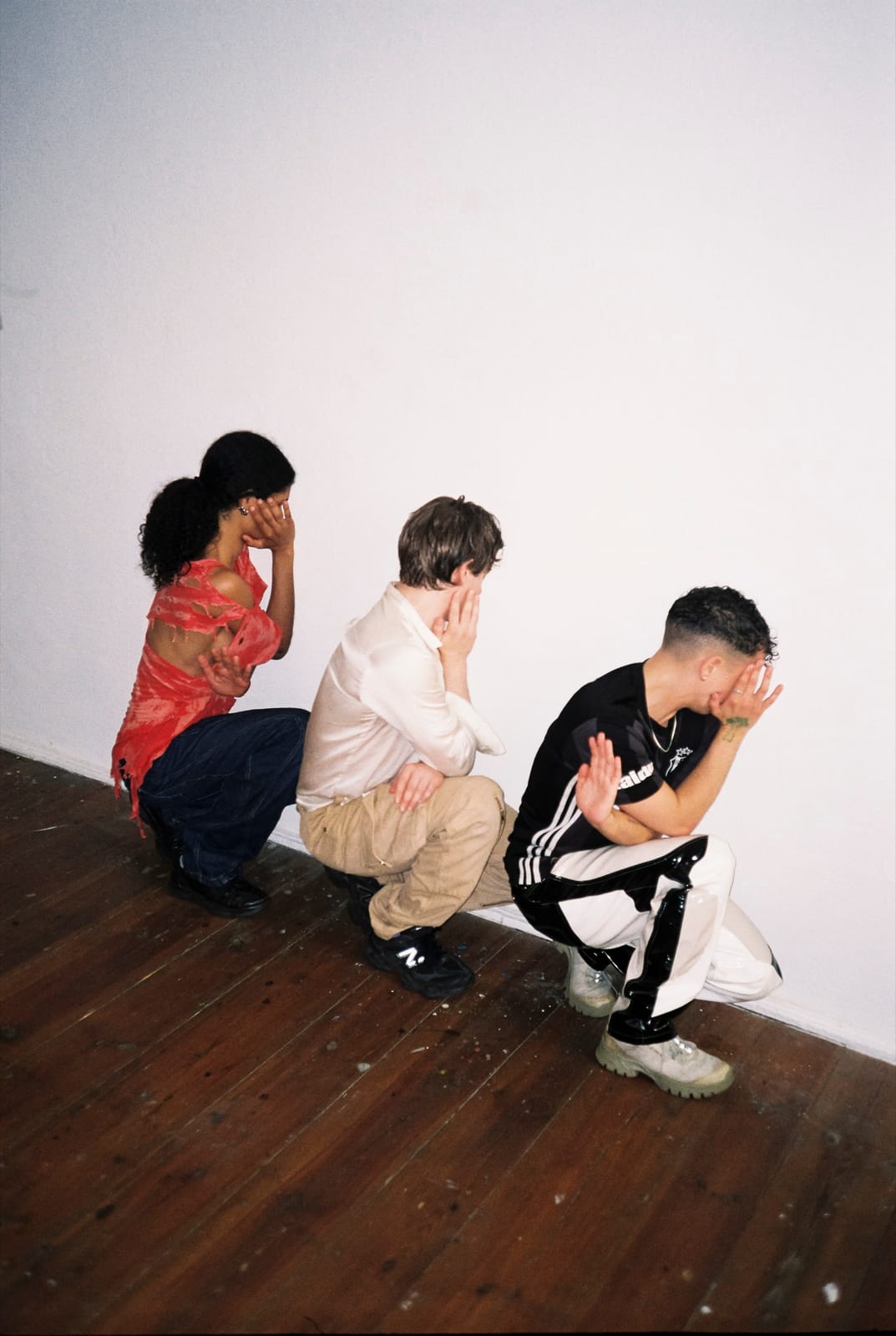
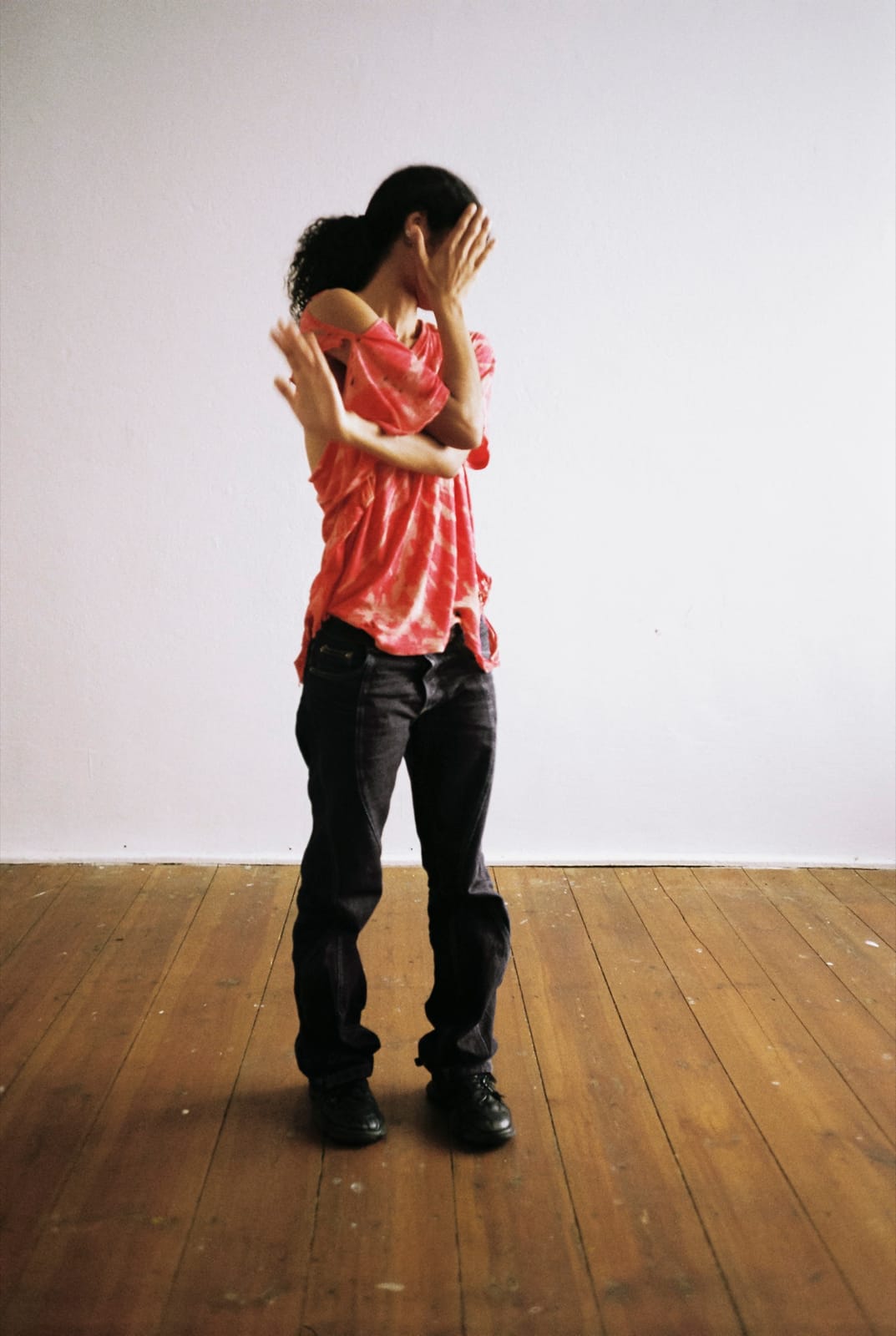
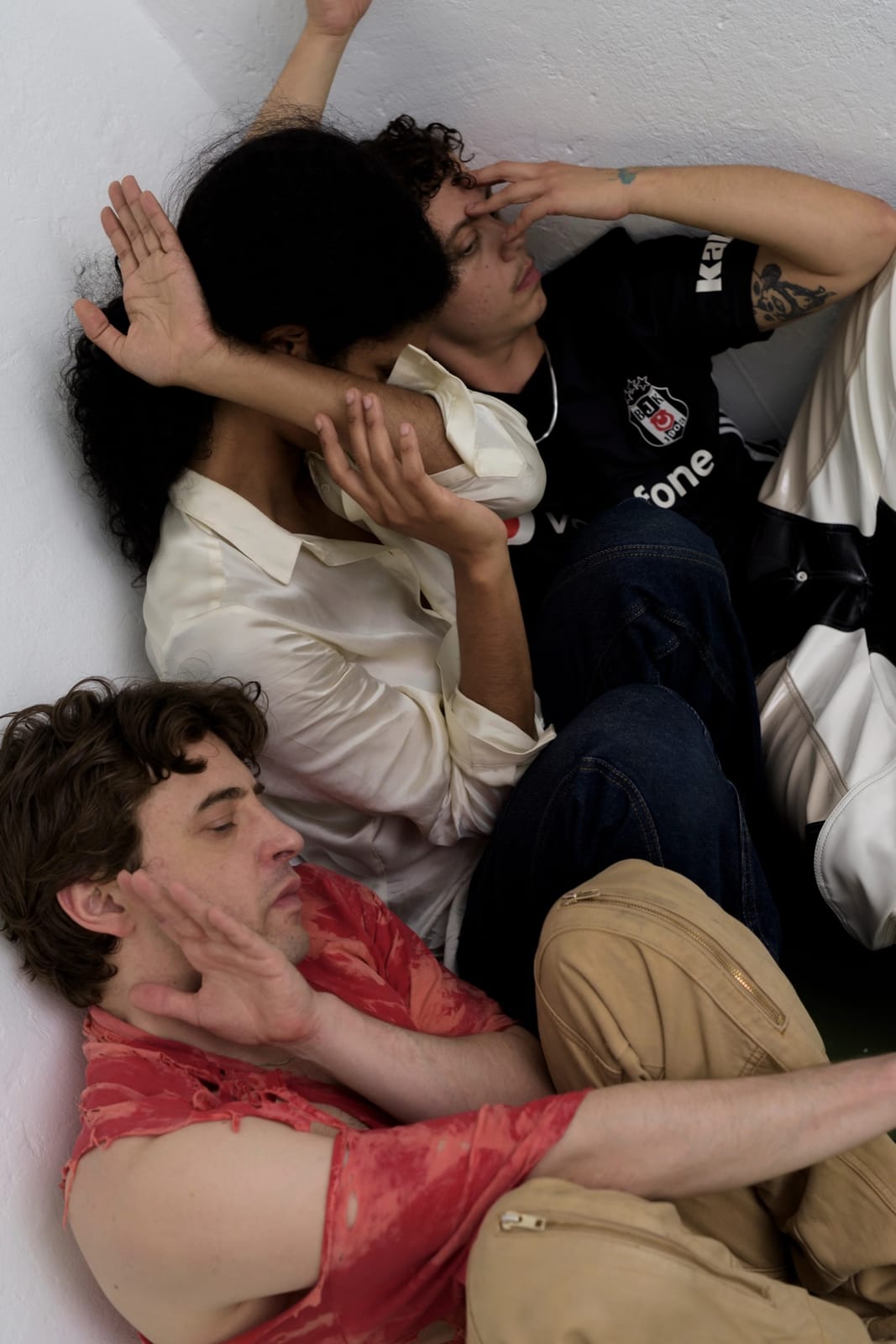
caner teker, b2b / nothing new, Between Bridges, Photos: Vincent Wechselberger
caner teker has produced several distinct bodies of work over the years, all of them threaded, one way or another, through the human body. There are links connecting them, they can be considered in tandem as they leak into and get messy with one another. However, each one of their lives is self-sufficient, with its own prepositions, the conditions it sets to realize.
The artist revels on them, lurks, takes the time to understand them, to relive them. caner treats them as an act that’s bound to end before it can reset and come back to life in a different iteration and setting. Like in the theater: a sequence of reenactments must come to an end for the protagonists to reach closure. How do you revisit such acts, especially ones that are born through action, bodies, and repetition? What do you do with them after their breaths are silenced and their limbs tired?
The exhibition bears the title repertoire – a sum of works, a body, a collection of acts someone has mastered and are able to perform repeatedly; repetitions that will keep on adapting to their surroundings as they re-emerge. caner teker’s practice is grounded in what is essentially a set of directions. These are a framework for the performances which are enacted with bodily intensity and emotional honesty. There is a frame of reference but no script with authority and pressure. The artist provides an instruction, some select parameters that remain in their control, and the rest is left up to the performers to execute and live through. caner acts in this sense as an instigator and facilitator.
Bruises form; two bodies quiver away from one another in slowness. They are in a fighting ring, being looked at, stared at, they smear oil all over each other and grab onto hands, waistbands, backs. They are tossing and turning. Here, right now, however they are still. What we see is a second-hand emotion, equally strong, yet different. The work, titled KIRKPINAR, draws on elements of Yağlı Güreş, traditional Turkish oil wrestling. It is always performed by two people and lasts for about an hour.
On the occasion of repertoire, the artist is showing a two-channel video work based on these performances. The film confronts viewers with live acts that are now becoming the subject of a new form, they are re-seen, worked through, and incorporated into a body of works. They occupy the space and time of the institution on their own terms, before retracting and reshaping for their next outing. The space is loud and dark; the oil doesn’t smell through the flatness of the image. The first room is re-made in what appears to be a boxing ring; space has been demarcated to allude to the confines of a fighting zone. All this is conditional on labor and material available for the artist’s score to be adapted, translated to a new set of possibilities.
Two of the works have entered institutions, they are part of collections, holdings in a bigger sum. What has been acquired is the score, the instructional device caner has drafted for the institutions to enable the works to sprout to life on their own terms, and to confront the new framework provided by their institutionalization.
It feels that the leakage of these live works, which of course, depending on time and resources can’t always be re-performed, stretches away. Their scoring element, the directive they must fulfil, attains a new meaning. The score reads as a conceptual backbone for the institution as well. Elements of documentation, fragments that might have absorbed the oil of their predecessors; prosthetic forms that allude to the presence of a body with all its fights, love, strength and rage, come alive. All works in the exhibition exist as written scores, they live as instructions and can be owned, re-staged and re-interpreted within and outside the borders of institutions.
A resilient act of translation occurs here, it happens now and carries memories and traces from the past; bruises, scratches, and all….
–Haris Giannouras